They Called It a Parade Rehearsal: Indonesia’s Fences and Whose Security They Protect
Salaam from Jakarta.
Writing this may put me on their watch list because, oh no, I appear to use my critical thinking, possess empathy, and exercise my self-agency! The horror!
Anyway-
Remember the fencing and un-fencing of the malls I wrote about last week? This traces what came before those fences. Written from an actual repressive, authoritarian, post-colonial nation-state that hates human rights.
Early this month, footage of military tactical vehicles lined up near Monas started circulating, and for a few hours half the country wondered whether the state was quietly prepositioning for another crackdown. Police and the armed forces spent days walking it back: the vehicles were personnel transport trucks for the 81st Independence Day commemoration, the fencing going up around business districts and malls was store management being cautious, nothing to see, the Daily Operational Reporting System confirms national stability, please stop spreading hoaxes. Major General Muhammad Nas asked the public directly not to treat the rehearsal as provocation. But aren’t they threatening the public with the display of what would happen if anyone exercises any political agency by voicing out their concern and criticism? Who arrests anyone on the basis of an allegation with evidence that is still under investigation? What kind of justice is that? Do not bring up national security when the biggest threat to people’s freedom is their own government and its state apparatus. So whose security are you protecting with your justice system if you start arresting anyone exercising their rights to criticise the people whose salaries are paid by ordinary people’s taxes?
DM was charged under Article 48 paragraph (1) in conjunction with Article 32 paragraph (1), Article 51 paragraph (1) in conjunction with Article 35 of the ITE Law, and Article 264 of the new Criminal Code, over an alleged post about a protest call. The first two provisions exist to punish people who break into someone else’s electronic system and alter data that isn’t theirs, or forge a document to make it pass as authentic. Neither describes a social media post published under someone’s own name. Only Article 264 even applies to speech: broadcasting news that is uncertain, exaggerated, or incomplete, which the person knows or reasonably should know may cause unrest. It is close to the same provision Indonesia’s own Constitutional Court struck down in 2023 for being too vague to satisfy legal certainty, brought back almost word for word in the new Criminal Code regardless.
How would people know it’s fake news, rather than the state apparatus wanting to suppress dissent and dictate what counts as fact and what counts as fake? The law expects people to use their own critical thinking to avoid broadcasting or disseminating news that is uncertain, exaggerated, or incomplete, which the person knows or reasonably should know may cause unrest, while voicing any concern or criticism can be met with exactly this kind of response from the people whose salaries are paid by taxpayers.
Pretty rich, coming from a government whose president claimed Iran already has nuclear weapons with no source, met with a swift denial from Tehran, then let two people who commented on that same claim get arrested under the exact law built to punish an unverified claim. Parroting decades of Zionist lies costs him nothing; repeating it back costs everyone else their freedom.
I believe the fences went up for Independence Day. I do not believe the instinct behind them is about Independence Day at all. A state doesn’t reach for fencing around shopping centres and industrial zones because it feels secure. It reaches for that because it remembers this past June, barely two months ago, when a 32 percent fuel price hike landed on top of 268 trillion rupiah in spending riddled with corruption and the resurrection of dwifungsi ABRI, the military’s old claim to civilian institutions that Reformasi was supposed to have buried in 1998; students tore down barricades from Jakarta to Bandung to North and South Sumatra under a protest name precise enough to sting: “Heading to Bankrupt Indonesia.” The state remembers what it built its own crisis out of. So it fences the mall before it fences its own decisions.
Dwifungsi ABRI, the doctrine that gives Indonesia’s military a permanent civilian governing role, is Cold War containment architecture, built with direct US backing under Suharto to guarantee a compliant, anti-communist, capital-friendly Indonesia for decades after 1965’s mass killings cleared the ground for it; that whole charade did not spring from nowhere. The muscle memory currently fencing Jakarta’s malls in anticipation of protests that officials insist aren’t coming was assembled, in large part, by the same imperial logic that disciplines populations everywhere it operates. Different stage, same script: discipline the population before the population organises, and call the discipline a routine.
Is this nationalism? Is this for national security? Is this new, or has it been this way even after the fall of Suharto’s tyrannical government? The assassination of a prominent human rights lawyer and activist mid-flight in 2004 should give you the answer.
What I have an interest in is naming, precisely, what the fencing is for. Independence Day is the occasion, not the reason. The fencing is insurance, purchased in advance, against the possibility that ordinary Indonesians decide again that a government spending on lawmaker perks and military expansion while the rupiah sits near 18,000 to the dollar has forfeited its claim to their patience. Jakarta’s fences, Gaza’s Yellow Line, and Tehran’s file-sharing arrangement with Washington all run on the same premise: that people organising for survival are the emergency, and people extracting from them are the stability.
The people in this week’s roundup are absorbing extraction of their own, in rent, food, medicine, and the everyday cost of staying alive under systems built to make that expensive on purpose, wherever they are. Read through the requests, give what you can, and share what you can’t fund yourself. From each according to their capacity, to each according to their needs; that has never once needed a state’s permission.
✨Mutual Aid Roundup✨
@jack_mendo @broodcoffee @AnthonyJK @squirrellilly @ellespeaks @SabiLewSounds @ash @nighttimeapparition @Kuniti_shino @tiredpinklover
✨Palestinian Campaign Spotlight✨

Help Save Mitqal’s Family
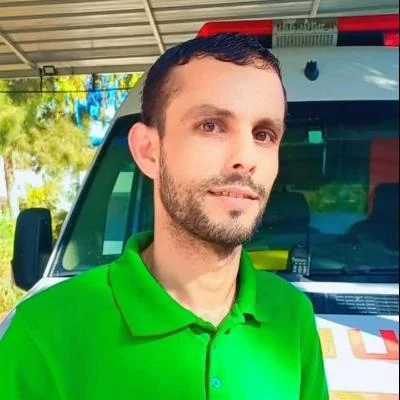
Mithqal is living through ongoing bombing and unreliable internet access in Gaza, and asks for support to cover food, water, and other basic survival needs.
[View original post]
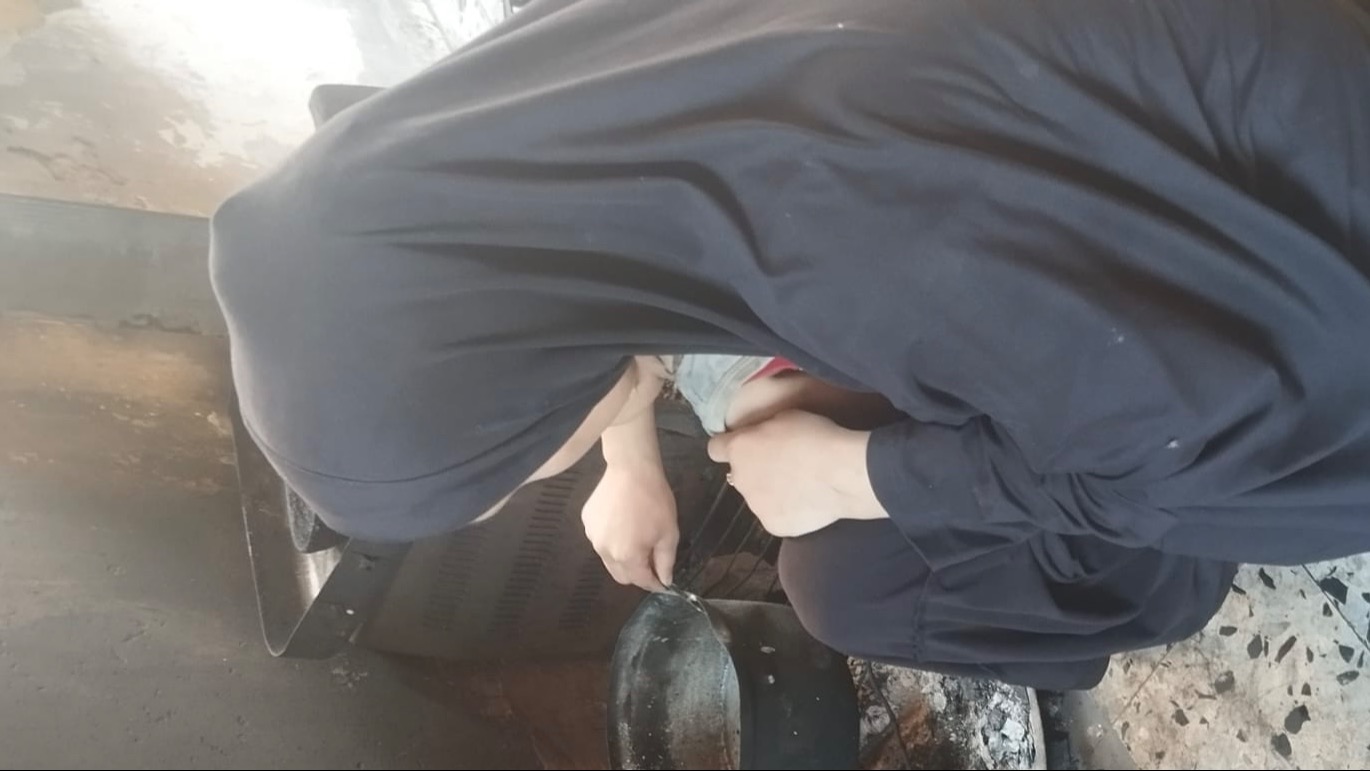
Donate and help Ala’a and her children
Alaa is a mother in North Gaza raising her children alone while her husband is imprisoned. Hunger is exhausting her children, her daughter is sick, and Alaa asks for support to help her family survive. [View original post]
🗣️Support Corner🗣️
📱Share this article far and wide. Subscribe to get this update in your inbox!
This space is held together by a disabled Indonesian Muslim woman. Monthly support keeps me fed, medicated, and connected, and helps me keep resisting corporate funding and the humanitarian-industrial complex through my writing and mutual aid projects.
If you find this voluntary work worth supporting, please do so by pledging as little as $1 monthly via Liberapay or other tiers available across Liberapay, ko-fi, and Patreon. One-off support helps too. Any amount genuinely helps.

From each according to their capacity, to each according their needs.
Feel free to tag me in your mutual aid requests for a boost.
https://mutualaidspace.org/announcement-mutual-aid-form
Fediverse Reactions
























@mutualaid @mutualaid @disability @autistics @actuallyadhd @nillerus @khurry @theleftistlawyer @Kristenzeta @frugalcoffee @wrzky @wrzky @edendestroyer @QasimRashid @indonesia
#Gaza #Palestine #genocide #ceasefire #anticapitalism #antiimperialism #mutualaid #Islam #mutualaidrequest #DisabilityMutualAid #mutualaidspace #DisabilityCrowdfund #transmutualaid #queermutualaid #emergencycrowdfund #gazamutualaid #gazaverified #poverty #healthcare #mentalhealth #disability #neurodivergence #activism #fedihelp #fediverse #blackfedi #helpfolkslive2026 #blackmutualaid #bipocma #writer #disabledwriters #writersofmastodon #IRGC #Iran #jakarta #Indonesia #mutualaidvoid #helpsky