Neither Did You
Salaam from Jakarta
I’ve always been open about my identity and positionality within global power structures, whether through my profile picture, casual social media posts, or published articles. Yet being mistaken for an American simply because I use English online is a regular occurrence. Perhaps it’s because I’m politically literate and outspoken about geopolitics, particularly how the internet is structured to serve the dominant narrative of the global terrorist state of America. Or perhaps it’s simply what USians do: assume everyone who speaks English is a USian.
My activism has largely been online these past few years due to disability. Through it, I’ve met and befriended many people from the US, which has made me somewhat familiar with the social dynamics of the metropole. But this isn’t about my online activism or presence; this is about being a Muslim woman.
Unlike in settler-colonial states or former empires such as the UK, Muslims in my country are the majority. Ironically, this is true of many formerly colonised nations and countries that experienced significant intervention from the US and its allies throughout the 20th and 21st centuries. Indonesia is home to more than 287 million people and has the largest Muslim population on earth, not in West Asia and North Africa as many assume, but here in Southeast Asia, where Islam reached the archipelago through Indian Ocean trade networks and became increasingly widespread between the 13th and 16th centuries.
There are more than 600 ethnic groups in Indonesia, with Javanese people making up roughly 40% of the population. I’m a Muslim Indonesian woman of Javanese and Minangkabau descent, which places me within a dominant ethnic and religious group in my country.
When we talk about dominant groups, we often think of ruling classes or those closest to power. Yet I’m also a woman in hijab whose perceived attractiveness makes people feel entitled to deny my disability. Being a woman is politically difficult enough; being disabled and perceived as “attractive” only adds further layers of dehumanisation. Does belonging to a dominant group stop being a privilege because of the ableist, classist, and sexist treatment I’ve experienced? No. It remains a privilege in more ways than one.
Does that grant me the right to deny who belongs in my country and who doesn’t?
As a Muslim, I have no right to tell people who belong in the world and who do not. But as someone historically literate about how Indonesian identity emerged, who understands its significance in anti-colonial struggle, and who is painfully aware of my own positionality within contemporary power structures, I state plainly: Indonesians have every right to decide who belongs in Indonesia without foreign powers dictating the answer for us.
That is not nationalism.
I simply understand how imperialism works. Indonesian nationality was not born from a dispute within a colony over who should govern it more effectively. It was not the result of settlers breaking away from a distant monarchy while remaining on stolen land. Indonesian identity emerged through resistance to more than three centuries of colonisation. It became the political identity through which the peoples of the archipelago reclaimed their dignity and self-determination just over eight decades ago.
Over the years, we have watched the United States establish itself as one of the greatest threats to humanity and world peace. Its treatment of Black and Brown communities never fails to enrage me.
An empire built through the replacement of Indigenous populations and the trafficking of enslaved Africans has its structural violence normalised and amplified daily through internet algorithms, mainstream media, and even conversations with some of my closest comrades in the US. A few days ago, a comrade sent me the following story while venting on Signal.
Because, of course, racists in the US continue to delude themselves into claiming ownership over stolen land and telling others they don’t belong there. Dasha Kilpatrick, a white woman in Texas, told two Muslim women that they had no place in a “Christian country.”
Well, Dasha, neither did you.
Islam reached Turtle Island long before Europeans arrived. Islam belongs in the US just as it belongs everywhere else. You and I both know who never belonged on Turtle Island.
Muslims in the US are not all immigrants. There are Indigenous Muslim Americans. There are Black American Muslims. There are converts. And even if they were immigrants, so what? It’s not as though the US is known for its altruistic efforts in a SWANA region that has endured repeated destabilisation, intervention, occupation, and war. Nor has that destabilisation slowed since the youngest member of the settler-colonial quartet was established in 1948.
An empire sustained through market domination, interventionism, historical revisionism, media manipulation, and the destabilisation of Global South countries shall never meet a peaceful end.
I’m not the kind of Muslim who responds to blatant bigotry or microaggression by insisting that “Islam is a peaceful religion”, when such situations are never peaceful or safe for Muslims to begin with. That statement is true to those who don’t need reassurance; beyond that circle, it becomes a defensive posture built entirely around the aggressor’s comfort. I would rather eat glass than respond defensively to a claim that frames us as inherently violent. To engage the hypothetical is to accept the bigot’s premise. Why would I want to convince anyone who wants me harmed that I’m peaceful? People would have to pay me an enormous amount of money to perform patience I don’t possess for those who do not deserve it.
Kilpatrick is not even the only white woman whose racist tirade resulted in a financial windfall. I still vividly remember Shiloh Hendrix, who called a five-year-old Black child the n-word and then raised nearly a million US dollars afterward.
My birthday is in a few days. As a Muslim woman in the Global South, all I want for my birthday is for more white women to weaponise their white women’s tears to mobilise people to contribute meaningfully to mutual aid requests below and to every request under the hashtag #MutualAidRequest.
If Dasha Kilpatrick and Shiloh Hendrix can do it, the rest of you can too.
✨Mutual Aid Roundup✨
@tiredpinklover @thereaders @SabiLewSounds @AnthonyJK @genXcrone @OshunThaGreat @cycletherapyHam @wrzky @pastelfluffyfox @squirrellilly
✨Palestinian Campaign Spotlight✨
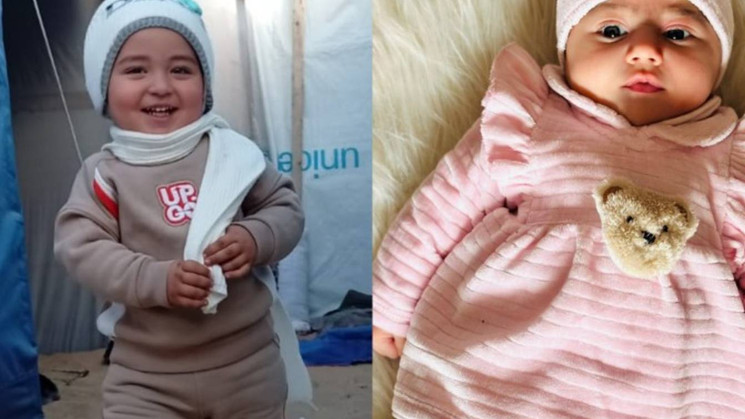
Samar’s Urgent Plea: Save Qamar and Omar
Samar is the sole breadwinner for her family in Gaza, fighting every day to cover food and basic needs for her husband and children. Open her campaign and give directly.
[View original post]
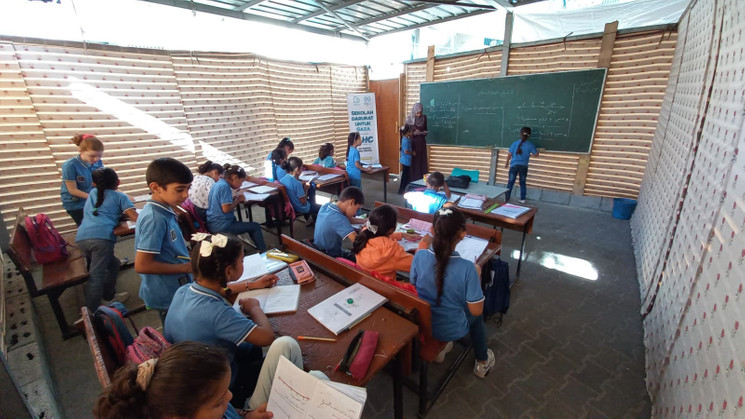
Islam and Family in Gaza: Rebuilding Hope After War
Islam and her family have gone nearly a month without a single contribution to their campaign, their needs unmet and constant. Their campaign has stalled. Give directly and share this further than her reach.
[View original post]
Want the weekly roundup, plus occasional updates from yours truly, in your inbox? Subscribe to WRZKY Weekly Dispatch.

From each according to their capacity, to each according their needs.
Feel free to tag me in your mutual aid requests for a boost.
https://mutualaidspace.org/announcement-mutual-aid-form
Fediverse Reactions








@mutualaid @mutualaid @disability @autistics @actuallyadhd @nillerus @khurry @theleftistlawyer @Kristenzeta @frugalcoffee @wrzky @posts
#mutualaid #mutualaidrequest #mutualaidspace #disabilitymutualaid #DisabilityCrowdfund #EmergencyCrowdfund #mutualaidboost #blackfedi #disability #activism #neurodivergence #anarchism #socialmedia #writer #disabilityjustice #Autism #ActuallyAutistic #ADHD #AuDHD #feminism #transmutualaid #poverty #healthcare #mentalhealth #books #Palestine #Gaza #genocide #Islam #Indonesia #Islamophobia #activitypub #fedihelp #DisabledWriters #HelpFolksLive